NEW YORK, December 2025 — A warm, shareable Christmas story has been making the rounds online: Bruce Springsteen, speaking about the meaning of the season, allegedly slipped away from cameras to deliver gifts to orphans in a private act of compassion—no speeches, no spotlight, just “small hands receiving warmth.” The posts are written in a cinematic tone and frequently present the moment as something witnessed by insiders, leaving readers with the impression that a hidden chapter of Springsteen’s generosity has finally surfaced.
But while the sentiment has traveled fast, the sourcing has not. A review of the versions circulating most widely shows that the claim is often repeated without verifiable details such as a specific organization, a date, a location, named witnesses, or reporting from established outlets. Several of the most visible pages pushing similar “quiet hero” narratives about Springsteen appear on viral-content sites rather than reputable news publications.
What’s Being Claimed—and What’s Missing
The heart of the story is straightforward: the “Boss” chooses humility over publicity, and the act becomes a symbol of Christmas “as love given freely.” That simplicity is a feature, not a bug—viral stories tend to thrive when the moral is clean and the details are emotional rather than logistical.
Gift baskets
What’s missing is what would normally make such a claim reportable. In credible charity coverage, even when an action is quiet, there is usually at least one confirmable anchor: a partner organization acknowledging the support, a quote from a representative, a photo with identifiable context, or a statement from the artist’s team. In this case, the narrative frequently relies on anonymous phrasing like “those who witnessed it,” which is difficult to evaluate.
The Complicating Factor: Springsteen’s Real Track Record of Giving
The reason the story feels believable to many fans is that Springsteen’s philanthropic reputation is not invented. He has long been associated with charitable causes, including support for hunger relief and other nonprofit work. A recent campaign page from the food bank network P2P Helps describes a partnership with Springsteen and states that he has supported local food banks for decades through fundraising and personal donations.
Charity-tracking resources also catalog his involvement with multiple causes over the years, reinforcing the broader point that giving is part of his public footprint.
That real history is exactly what makes unverified “secret kindness” stories so easy to attach to him. When the public already believes an artist is generous, a dramatic anecdote can spread without the friction that normally comes from skepticism.
Why These Stories Go Viral in December

Holiday virality has its own logic. In December, audiences are primed for narratives about gratitude, humility, and second chances. A story about private giving “away from cameras” hits a particularly modern nerve: people are tired of performative charity content, so a tale framed as anti-performance can feel especially pure.
The storytelling style also follows a familiar structure: establish the icon, remove the spotlight, reveal the unexpected compassion, then land the moral (“this is what Christmas truly means”). It reads less like a news report and more like a parable—easy to repost, easy to feel moved by, and hard to fact-check.
How to Share It Responsibly Without Killing the Emotion
If you’re posting this kind of story, there’s a clean way to keep the message without turning a viral anecdote into “confirmed news”:
-
Frame it as a circulating story rather than a verified event.
-
Avoid specifics (names of institutions, “orphans,” or exact actions) unless you can cite a credible source.
-
Shift the focus to what’s verifiable: Springsteen’s documented history of supporting causes like food banks, which aligns with the spirit of the narrative.
This approach matters because stories involving vulnerable children can unintentionally exploit sensitivity. Accuracy is part of respect—especially when the subject is charity and the beneficiaries are unnamed.
The Bigger Truth the Story Points Toward
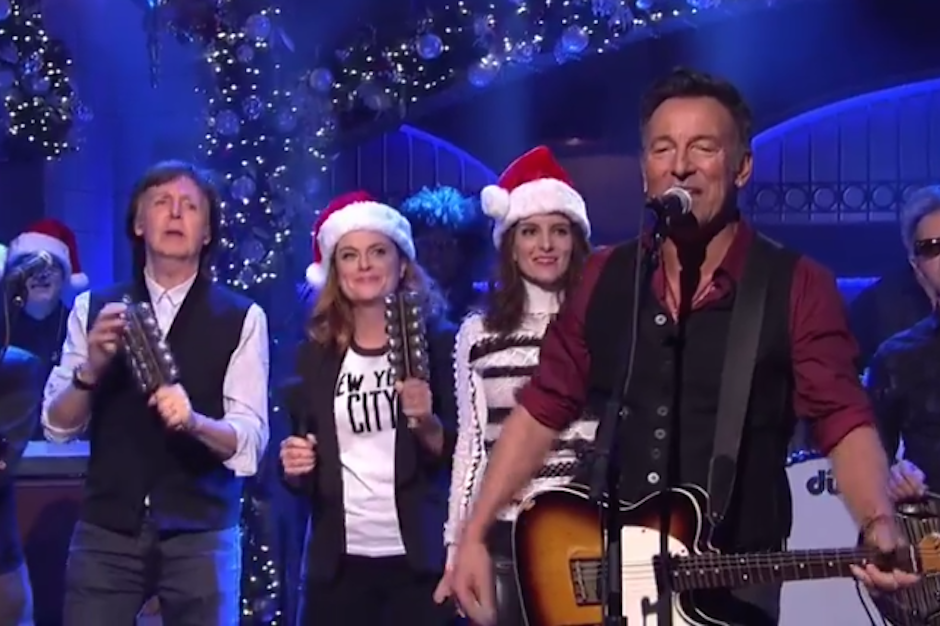
Even if the precise “gift delivery to orphans” moment remains unverified, the reason it resonates is revealing. People want the season to mean something beyond noise and consumption. They want proof that kindness can still be quiet, and that public figures can act without turning every good deed into content.
Springsteen, with his long-running image as a voice for ordinary lives, becomes a natural symbol for that hope. And while the internet may blur the line between tribute and reporting, the lasting takeaway doesn’t have to be false: generosity, when it’s real, is often simple—and it often happens when no one is watching.
If you want, paste the exact version you plan to post, and I’ll rewrite it in a “news-style” format that keeps the warmth but uses careful language (so it doesn’t overclaim what can’t be confirmed).