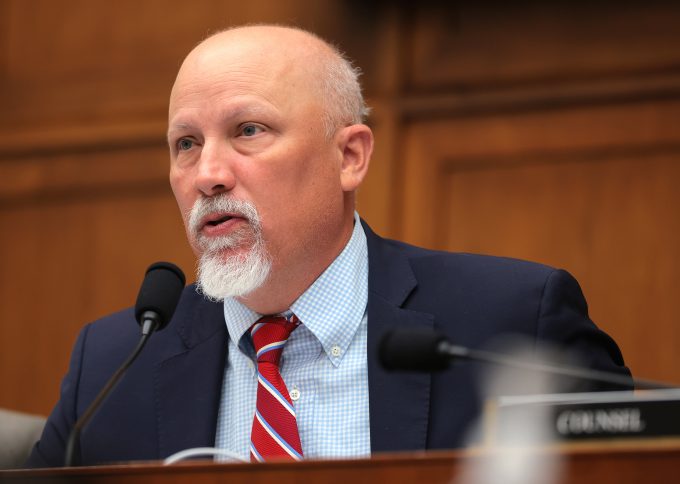
Washington erupted into fierce debate after Representative Chip Roy and Senator John Neely Kennedy introduced the U.S. Courts Act of 2025, a bill rapidly reframed by supporters and critics alike as a defining cultural fault line.

The proposal seeks to prohibit federal courts from enforcing any foreign legal system that conflicts with constitutional protections, explicitly naming systems that restrict speech, equality, or due process.
Supporters immediately branded the legislation the “American Sharia Freedom Act,” a label that intensified attention and sharpened reactions across media platforms and political camps.
Roy argued publicly that no American should ever face legal standards he described as medieval, particularly those discriminating against women or punishing belief and expression.
Kennedy reinforced the message with language that spread quickly online, insisting that religious freedom is protected, but violence or mutilation has no place in American courts.
His remark about “cutting off hands in my court” became a rallying phrase, praised by supporters as blunt clarity and condemned by critics as inflammatory oversimplification.
The speed with which the bill’s framing escalated revealed how quickly legal arguments transform into cultural symbols in a polarized media environment.
Within hours, progressive groups warned that the proposal risked stigmatizing religious minorities by conflating faith with extremist interpretations of foreign law.
Civil liberties advocates emphasized that American courts already prioritize constitutional supremacy, questioning whether the bill addressed a real legal problem or an imagined threat.

Conservative lawmakers countered that clarity matters, arguing that explicit bans prevent incremental erosion through arbitration, contracts, or international legal entanglements.
They framed the bill as preventative, not punitive, insisting it protects constitutional rights rather than targeting any religion or community.
The argument quickly moved beyond legal mechanics into a broader conversation about sovereignty, globalization, and cultural confidence in American institutions.
Online reactions split sharply, with hashtags celebrating a “Sharia-Free America” trending alongside warnings about fear-based policymaking.
Commentators noted that the emotional intensity often overshadowed the bill’s actual text, which focuses on constitutional conflicts rather than religious doctrine itself.
Still, language matters in politics, and the bill’s nickname became inseparable from public perception, shaping how millions interpreted its intent.
A national poll showing 68 percent support for banning foreign doctrines that violate constitutional protections complicated the narrative further.
The data revealed support cutting across party lines, including significant backing from Democrats who emphasized civil rights and equal protection concerns.
Analysts suggested the numbers reflect broad agreement on constitutional supremacy, even as disagreement persists over messaging and potential unintended consequences.
The bill’s supporters highlighted the poll as validation, arguing that Americans broadly reject any legal framework undermining equality, free speech, or due process.
Opponents cautioned that polls capture sentiment, not implementation risks, urging lawmakers to avoid rhetoric that could marginalize communities already under scrutiny.
Legal scholars weighed in, explaining that U.S. courts already refuse to enforce foreign laws conflicting with constitutional principles.
However, they acknowledged that explicit statutory language could close loopholes in arbitration or family law disputes involving foreign standards.
That nuance fueled further debate, with some viewing the bill as redundant symbolism and others seeing it as necessary reinforcement.
Kennedy framed the legislation as a moral boundary rather than a procedural adjustment, invoking historical sacrifices made to defend constitutional rights.
His references to fallen patriots resonated with voters who view constitutional protections as sacred and nonnegotiable.
Critics responded that moral boundaries should be enforced through inclusive language that distinguishes between violent practices and peaceful religious belief.
The distinction became central to televised debates, op-eds, and campus discussions nationwide.
Faith leaders from multiple traditions issued statements supporting constitutional supremacy while rejecting rhetoric that frames faith as inherently suspect.
They urged lawmakers to reaffirm religious liberty alongside legal clarity, warning against narratives that conflate extremism with identity.
Supporters of the bill argued that religious liberty thrives precisely because the Constitution prevents any theocratic legal system from taking root.
They maintained that clear statutory language strengthens pluralism by protecting individuals from coercive legal standards.
The fight intensified as progressive lawmakers proposed amendments emphasizing nondiscrimination and explicitly safeguarding religious practice.
Conservatives debated whether such amendments clarified intent or diluted the bill’s deterrent message.
Media coverage amplified every exchange, often reducing complex legal questions into sound bites optimized for outrage and engagement.
Observers noted that the bill’s real impact may be less legal than symbolic, shaping how Americans discuss sovereignty and values.

Symbolic legislation can mobilize voters, signal priorities, and draw lines that define political identity.
In this case, the line centered on whether explicit prohibition reassures constitutional confidence or undermines social cohesion.
State officials watched closely, anticipating ripple effects in family courts, arbitration agreements, and international business disputes.
Some warned of potential challenges under existing treaty obligations, while others dismissed such concerns as manageable.
The Justice Department remained cautious, signaling it would review the bill’s language for constitutional consistency if it advanced.
That restraint did little to cool public reaction, which continued escalating across social media and cable news.
Activists on both sides organized rallies, petitions, and fundraising campaigns framed around defending America’s legal soul.
The phrase “Sharia-Free America” became both a slogan and a flashpoint, embodying the tension between clarity and caricature.
Political strategists observed that the debate taps into voter anxiety about cultural change and institutional trust.

Trust, they argued, erodes when citizens fear unfamiliar systems replacing familiar protections.
Yet trust also erodes when communities feel targeted by sweeping narratives disconnected from lived reality.
The challenge for lawmakers is navigating both fears without amplifying either unjustly.
As hearings loom, testimony from legal experts, civil rights organizations, and faith leaders is expected to shape revisions.
Whether compromise language emerges may determine if the bill advances or stalls amid controversy.
Supporters insist delay proves urgency, framing resistance as evidence that constitutional boundaries require reinforcement.