A recent monologue by late-night host Jimmy Kimmel has set off a widespread cultural and political reaction after he used his platform to sharply criticize former President Donald Trump and Representative Marjorie Taylor Greene. The segment, which aired during Kimmel’s nightly show, addressed a range of current political controversies, from Trump’s public statements to Greene’s online responses, generating major discussion across broadcast networks and social media.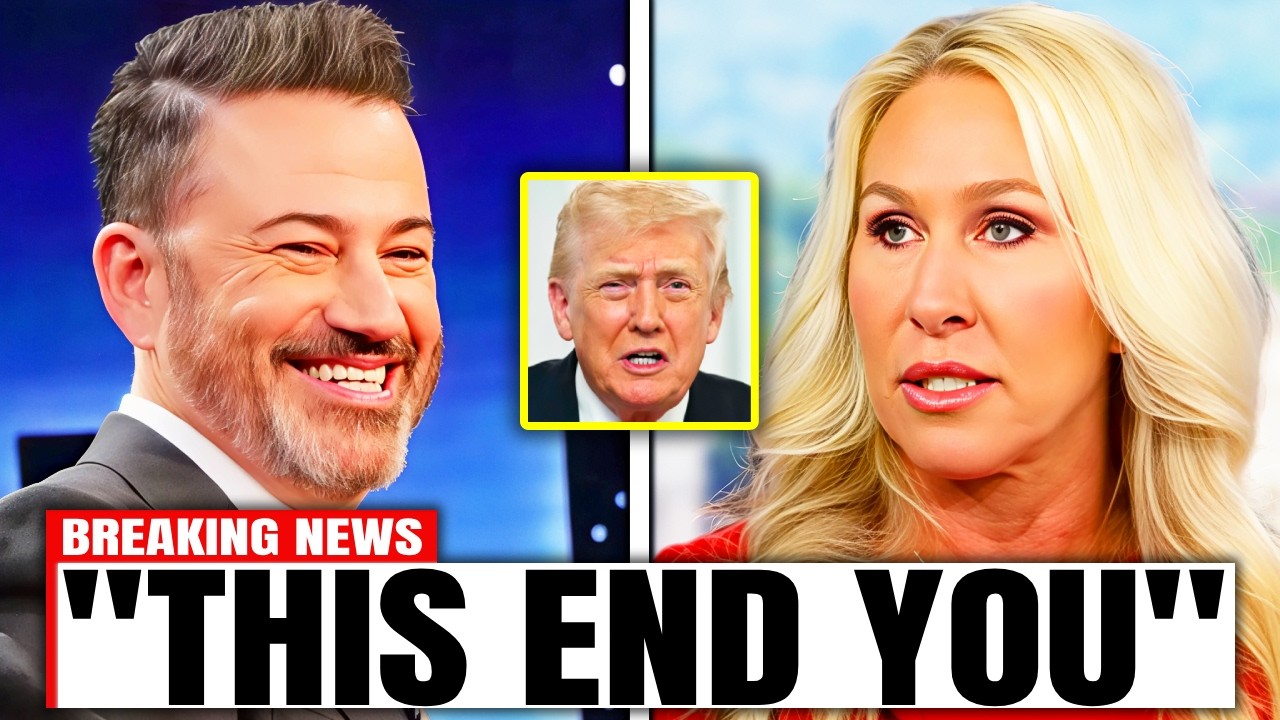
Kimmel began by airing clips of Trump appearing before crowds where both cheers and boos could be heard, using the footage to highlight the contrasting reactions the former president continues to receive. He joked about Trump’s history with professional football and his past business ventures, framing much of the commentary around Trump’s well-documented tendency to speak confidently on topics regardless of expertise. From there, Kimmel transitioned to Greene, referencing her recent public disagreements with fellow lawmakers and her strong reactions to criticism from media figures.
During the monologue, Kimmel explained that Greene had expressed anger over a joke he made in an earlier episode and had publicly stated she reported the comment to Capitol Police. He contrasted her complaint with her previous public stances on law enforcement, particularly her opposition to awarding congressional honors to police officers involved in responding to the January 6 attack on the U.S. Capitol. Kimmel emphasized that he does not condone threats or harassment toward any public figure but maintained that his remark was intended as a humorous critique within the bounds of political satire.
The segment also revisited a series of policy discussions and public claims made by Trump and his administration, including statements about inflation, the cost of food and gas, and domestic travel concerns during holidays. Kimmel responded to those claims with comedic exaggerations, a common feature of late-night political commentary, while contrasting them with widely reported economic data.
Kimmel then highlighted Greene’s criticism of him on social media, where she accused him of promoting violent rhetoric. Using a lighthearted tone, he noted the irony of such a charge coming from someone known for intense and confrontational political messaging. He also pointed to past political advertisements in which Greene depicted herself using aggressive imagery and messaging toward political opponents.
Throughout the segment, Kimmel continued to contrast Trump’s and Greene’s public statements with his own comedic observations. He made additional references to broader political tensions, including recent debates over economic policy, government shutdowns, and regulatory decisions. In particular, he mentioned past controversies involving the Federal Communications Commission and accusations of political pressure related to media coverage of elected officials.
The monologue also touched on public reactions to Trump’s policy positions, including statements made during press conferences and public appearances. Kimmel critiqued these remarks with a combination of humor, impersonation, and commentary, which drew audible reactions from the studio audience. He portrayed Trump and Greene as recurring subjects of political theater whose public statements often generate significant media attention.
Kimmel further addressed how his commentary had spread online in the days following the broadcast. Clips from the monologue circulated widely on platforms such as YouTube, X, and TikTok, where both supporters and critics of Trump and Greene posted commentary and reaction videos. Many social media users responded humorously, while others debated the role of late-night comedy in political discourse.
The episode concluded with Kimmel referencing the ongoing public interest in political satire, noting that the reactions show how deeply politics and entertainment have become intertwined. He emphasized that comedy offers a way for audiences to process the rapid pace of political developments, even when those issues are serious or polarizing.
Overall, Kimmel’s monologue—part political critique, part comedic performance—underscored the continued influence of late-night television in shaping national conversations. While the reactions were sharply divided across ideological lines, the widespread attention highlighted how commentary from entertainers can amplify public debates surrounding elected officials and major political events.