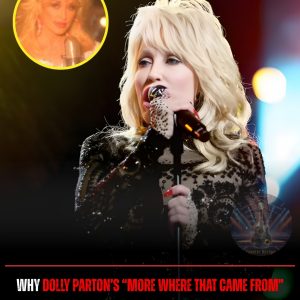
Dolly Parton’s “Here You Come Again” remains one of the defining songs not only of her career but of the entire pop-country landscape. Released in 1977 as the title track of her album, the song marked a bold turning point for Parton — a shift toward a polished, mainstream sound that would propel her beyond country fame and into worldwide stardom. Written by the legendary songwriting duo Barry Mann and Cynthia Weil, the track blended irresistible charm, gentle humor, and a melody that felt universal. It was a departure, but also a revelation: Dolly could conquer any genre without losing an ounce of authenticity.
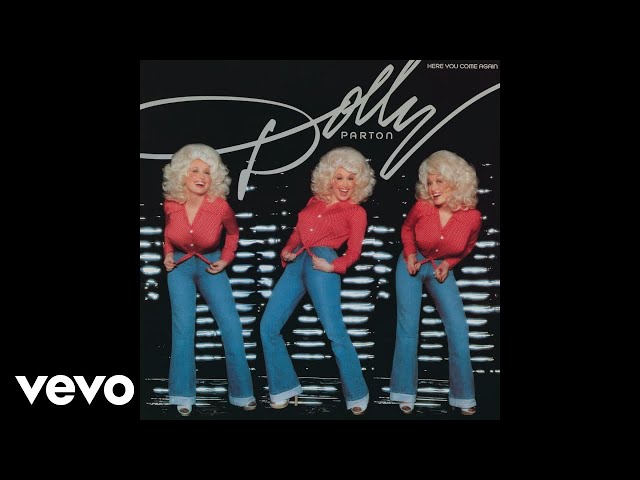
The lyrics, centered on the tug-of-war between willpower and irresistible attraction, captured a feeling so many listeners understood. “Here you come again… just when I’ve begun to get myself together,” she sings with a wink — a mix of frustration, affection, and helplessness all wrapped in Dolly’s signature sparkle. The story was simple, but the delivery was magic. Her voice carried the warmth of country roots while embracing the polish of pop production, creating a sound that audiences across the world instantly connected with.

Commercially, the song was a phenomenon. “Here You Come Again” shot straight to number one on the country charts and crossed over to Billboard’s pop charts, becoming one of the biggest hits of her career. The success not only expanded her fanbase but also redefined what a crossover could be — effortless, joyful, and true to an artist’s identity. The song earned her a Grammy Award for Best Female Country Vocal Performance, a milestone that celebrated both artistic evolution and undeniable star power.
But beyond awards and statistics, “Here You Come Again” symbolized a new era. It was the moment Dolly Parton solidified herself as more than a country singer — she became an international cultural icon. Her blend of storytelling, vulnerability, and charisma created a blueprint many artists still follow today. The track introduced her to listeners who had never stepped into the country genre before, proving that a great song breaks boundaries, not just charts.
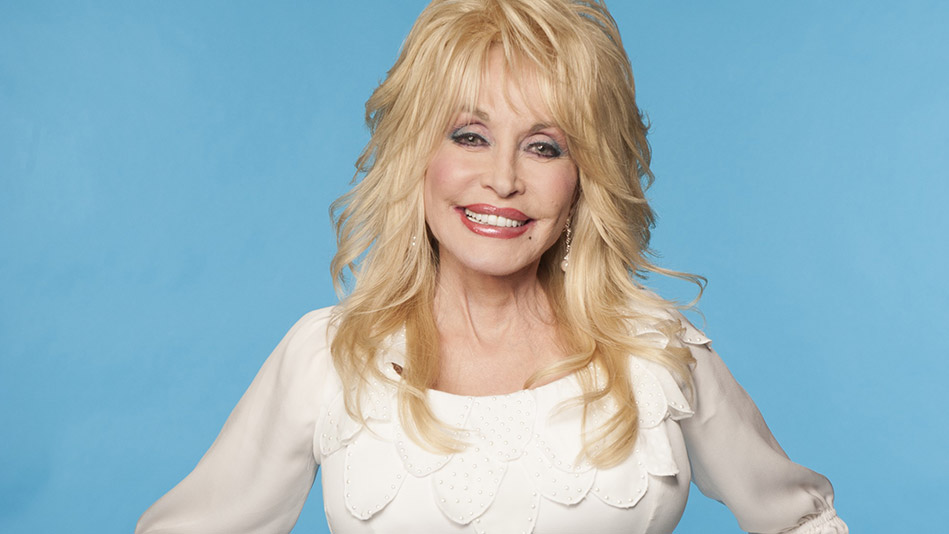
Nearly five decades later, the song’s charm hasn’t faded. It continues to appear in films, commercials, playlists, and tributes, reminding the world of its timeless appeal. Younger generations discover it through viral clips and nostalgic throwbacks, while longtime fans still feel the thrill of those opening piano notes. “Here You Come Again” is no longer just a hit — it’s a piece of musical history, a reminder of the moment Dolly Parton stepped confidently into the global spotlight and never stepped out.