Jasmine Crockett’s prominence in American politics is not the result of legislative achievement, but of confrontation elevated to strategy. In a Congress paralyzed by polarization, Crockett has learned how to command attention through sharp exchanges, prosecutorial language, and moments designed to travel far beyond the chamber. Her rise reflects a political system where visibility increasingly substitutes for governance, and moral certainty replaces procedural effectiveness.
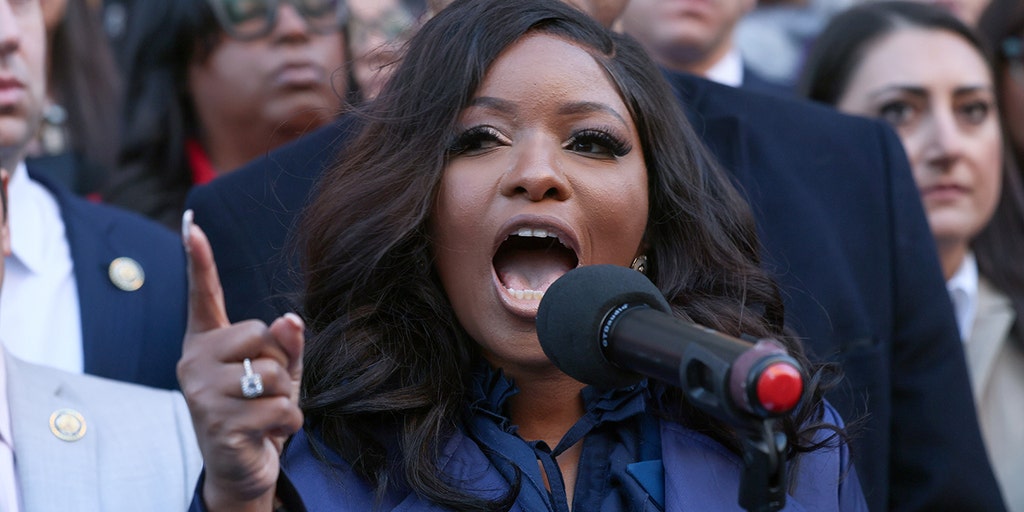
Crockett’s background as a civil rights attorney shapes her approach. She frames political conflict as a courtroom battle between right and wrong, legitimacy and threat. This framing resonates deeply with voters who see American democracy as under siege, but it also narrows the space for negotiation. When politics is treated as prosecution, compromise becomes capitulation and disagreement becomes evidence of bad faith. In this environment, confrontation is rewarded not for what it produces, but for how clearly it assigns blame.

The danger of this model is not rhetorical excess—it is institutional stagnation. Congress does not function through verdicts; it functions through bargaining, delay, and imperfect outcomes. When lawmakers gain influence primarily through confrontation, the incentive to govern weakens. Crockett’s challenge is not whether she can dominate a moment, but whether she can operate beyond it. If confrontation becomes the endpoint rather than the entry point, governance is reduced to performance, and the institution she seeks to reform remains broken.